
A Three Part Letter
Becoming someone capable of emotional generosity.

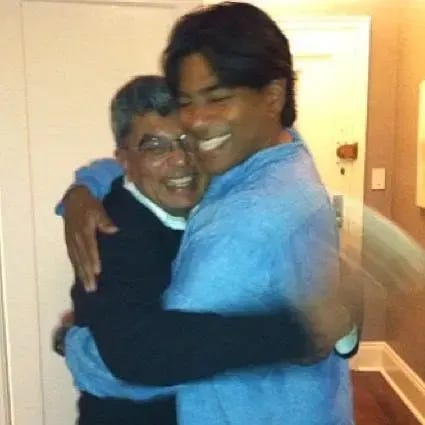
Over the years, this has become one of the resources I’ve shared most often with clients, friends, and workshop participants. Every few months, someone asks me to send it again, so I thought I’d publish it here where anyone can return to it.
I originally wrote this exercise many years ago, and it first appeared in The Kid and the King. Looking back, I can see that it planted seeds for much of what I’ve been writing recently in The Last 5%. Much of that writing has been about learning to turn inward, meeting the parts of ourselves we’ve spent a lifetime trying to fix, outrun, or silence, and slowly replacing judgment with curiosity, and shame with compassion.
Sooner or later, though, that same invitation extends beyond ourselves. It asks whether we are willing to meet the people who have hurt us with the same curiosity we’ve been learning to offer ourselves. Not because what they did was okay, and not because they deserve a free pass, but because we no longer want our lives organized around the pain they left behind.
When I first wrote this letter, I thought I was trying to forgive my father. Looking back, I don’t think that’s what I was doing at all. I think I was trying to become someone capable of emotional generosity. At the time I believed the obstacle was my father. Over the years I came to realize that the deeper work was inside me.
For much of my life, when a relationship became painful, my instinct was to create distance. Sometimes that was the right decision. But I also discovered that removing someone from my life wasn’t the same as releasing them from my heart. This letter became the medicine for that.
This isn’t a letter you send. It’s a letter you write for yourself.
Take your time with it. Write by hand if you can. Don’t worry about getting the words right. Just tell the truth.
Part One: The Rant
Begin with this sentence:
I’ve been really pissed at you, pretending that I’m not.
Then write without censoring yourself.
This is not the time to balance the story. That comes later.
Write everything.
The obvious hurts. The disappointments. The betrayals. The resentment you’ve carried for years. The conversations you wish you’d had. The things you never said. Even the small, petty grievances you’ve been embarrassed to admit.
Don’t worry about being fair.
Don’t try to sound wise.
Don’t clean it up.
This part isn’t about becoming a better person.
It’s about finally becoming an honest one.
Part Two: The Impact
When you’ve said everything you need to say, begin a new paragraph with these words:
What I realize today is that by holding onto this anger, it’s impacting my life in ways that are no longer acceptable to me.
Now the focus changes. The letter is no longer about what happened. It’s about what continuing to carry it has done to your life.
Where does it still show up?
Your closest relationships
Your work
Your body
Your sleep
Your relationship with authority
Your willingness to trust
Your capacity for intimacy
The point isn’t to create more shame. It’s simply to see the cost.
The realization that changed everything for me was this:
As long as I continued holding onto my anger, I remained a victim of what had happened.
Not because of what was done to me, but because I was still allowing it to shape how I lived today.
At some point I realized that was no longer acceptable to me.
I wanted my life back.
Part Three: Emotional Generosity
Begin with these words:
What I realize today...
Now begin wondering about the other person’s life.
Not to excuse them.
Not to minimize what happened.
Simply to understand that they, too, have an inner world you may never have fully seen.
I often begin with something like this:
I don’t believe there was ever a morning where you woke up and decided your purpose that day was to hurt me.
They may have caused me pain, but I no longer believe that pain was the purpose of their life.
Whether that is literally true isn’t really the point. The point is to soften the certainty you’ve carried for so long and become curious about the life that shaped them.
You might ask yourself:
What might it have been like to be them?
What burdens were they carrying?
What pain had they inherited?
What did they never receive that they couldn’t give?
What fears shaped the way they moved through the world?
If it’s true for you, this is also a place to acknowledge your own part in the relationship. Not because you’re responsible for what happened, but because relationships are rarely as simple as our pain first tells us they are.
This isn’t about excusing harmful behavior. Some things are inexcusable. Some relationships should end. Some boundaries should remain exactly where they are.
Emotional generosity asks none of those things.
It simply asks whether you are willing to let another person’s humanity exist alongside your own pain.
One Last Story
Years after writing this letter, I found myself sitting in the car with my father. There wasn’t a plan. I simply asked him, “What was it like having me as your son?”
He was quiet for a long moment.
Then he said, “It was really hard.”
That conversation didn’t erase the past. It didn’t suddenly make everything okay. But something had changed.
For the first time, I wasn’t only listening as the son who had been hurt. I was listening as another human being trying to understand the life sitting beside me. I heard about the pressure he carried as an immigrant, as an Indian physician, and as a father trying to raise a son whose life made very little sense inside the community he came from. I began to hear the loneliness in places where, years earlier, I could only hear criticism.
That didn’t change my experience, but it changed my relationship to his experience. And that changed something in me.
Looking back, I don’t think this letter taught me forgiveness. It taught me something much more important.
Every place where I struggled to feel emotionally generous toward another person pointed me back toward something I had not yet released inside myself. Not something broken, simply something that was still asking to be seen.
Over time I came to understand that the people I found hardest to be emotionally generous toward often became my greatest teachers. Not because they had something else to teach me, but because they revealed the places where I was still holding on. Every place I couldn’t extend emotional generosity invited me back into myself, to soften, to grieve, and eventually to release something I didn’t even know I was carrying.
Not because the other person had changed.
Not because the past had changed.
Because I had.
Today, whenever I notice myself withholding emotional generosity, I try to become curious instead of certain. What am I still holding onto? What inside me has not yet been released?
For me, that’s what this letter has always been about. Not forgiveness. Becoming the kind of person whose heart has room for both truth and humanity.
That’s a practice I’ll probably spend the rest of my life learning.
Thanks for continuing to walk this journey with me.
If you’ve made it this far, thank you. And thank you to my subscribers who continue to support this publication.
I know your time and attention are precious, and I do not take it lightly that you would spend some of it here with me. Your texts, emails, comments, and notes mean more than you probably realize. They remind me that this writing is part of a larger conversation, one I hope is useful, honest, and additive to the work so many of us are trying to do in our own lives and relationships.
One practical thing, because this is the strange world we now live in: your likes, comments, and shares really do matter. Not because I need applause, but because the algorithm often determines whether a piece like this reaches the people who may need it. Your engagement helps this work travel beyond the small circle where it began.
However you arrived here, and whatever you carry as you go, I am grateful you came.
From the heart,
Shasheen
Great share. And perfect timing. About to do this myself! Thank you. 🙏🏼
Hey Shasheen. So serendipitous that you would publish this today. I’m in process of writing a memoir and just 3 weeks ago read those letters from that Kid and the King exercise. Emotional freedom is a gift I’ve worked for. Emotional generosity is a gift i will work to give others.
Thank you